
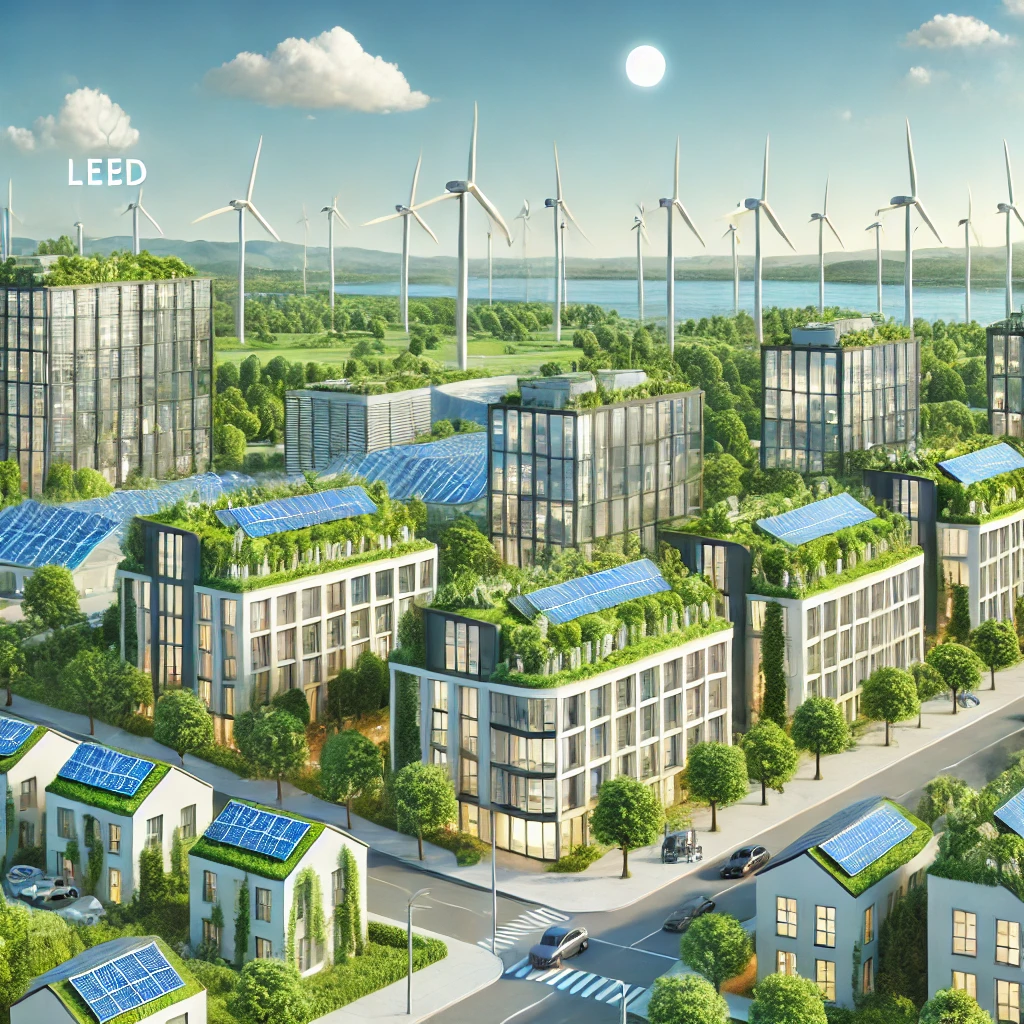
The Leadership in Energy and Environmental Design (LEED) certification is a globally recognized framework that promotes sustainable building design, construction, and operation. Administered by the U.S. Green Building Council (USGBC), LEED plays a crucial role in mitigating climate change by encouraging energy efficiency, reducing carbon emissions, and fostering responsible resource use in the built environment.
The Connection Between Buildings and Climate Change
Buildings are responsible for approximately 40% of global energy consumption and 33% of greenhouse gas (GHG) emissions. LEED addresses these environmental impacts by setting clear sustainability benchmarks aimed at reducing energy use, cutting carbon footprints, and enhancing overall environmental performance.
LEED Strategies That Mitigate Climate Change
1. Energy Efficiency and Renewable Energy
LEED-certified buildings are designed to consume less energy through:
- Improved insulation, lighting, and HVAC systems.
- Use of renewable energy sources like solar and wind.
- Compliance with strict energy performance standards, such as ASHRAE 90.1.
This reduces reliance on fossil fuels, directly cutting GHG emissions.
2. Water Conservation
Efficient water management reduces the energy required for water heating and treatment. LEED promotes:
- Low-flow fixtures.
- Rainwater harvesting.
- Efficient irrigation systems.
3. Sustainable Material Use
LEED encourages the use of recycled, renewable, and low-carbon materials:
- Reduces embodied carbon in building materials.
- Supports a circular economy by minimizing construction waste.
4. Carbon Reduction Strategies
LEED rewards projects for reducing operational and embodied carbon:
- Optimized energy performance credits.
- Incentives for carbon offset purchases and carbon-neutral operations.
5. Resilient and Adaptive Design
LEED promotes climate-resilient design that prepares buildings for future climate-related risks:
- Passive cooling systems.
- Elevated structures in flood-prone areas.
- Heat island reduction through reflective roofing and green spaces.
LEED Certification Levels and Climate Impact
LEED projects earn points across various categories to achieve certification levels:
- Certified: 40–49 points
- Silver: 50–59 points
- Gold: 60–79 points
- Platinum: 80+ points
Higher certification levels often indicate a stronger focus on reducing carbon emissions and resource consumption.
Broader Environmental and Economic Benefits
- Reduced GHG emissions: LEED buildings lower carbon footprints, contributing to global climate goals.
- Operational savings: Energy and water efficiency lead to significant cost reductions.
- Enhanced occupant health: Improved indoor air quality and comfort boost productivity.
Conclusion
LEED plays a pivotal role in combating climate change by encouraging environmentally responsible construction and operation. By reducing energy consumption, cutting emissions, and promoting resilience, LEED-certified buildings help create a sustainable future. Embracing LEED principles not only benefits the environment but also offers economic and social advantages, making it an essential tool in global climate action.